Recently, Professor Valery Shlyannikov, President of the Russian Group on Fracture (RFG) and Director of the Kazan Scientific Center of the Russian Academy of Sciences, along with Professor Oleg Plekhov, Director of the Perm Federal Research Center at the Ural Branch of the Russian Academy of Sciences and Academician of the Russian Academy of Sciences, and Dr. Elvira Plekhova, visited East China University of Science and Technology (ECUST) for the signing ceremony of a science and technology cooperation agreement and academic seminar. Professor Tu Shandong, President of the China Structural Integrity Consortium (CSIC) and Academician of the Chinese Academy of Engineering, along with Tang Jimin, Deputy Director of the International Cooperation and Exchange Office at ECUST, former CSIC Secretary-General and former Dean of the School of Mechanical and Power Engineering at ECUST, Professor Wang Zhengdong, Professor Chen Haofeng, Professor Wen Jianfeng, and representatives from member institutions including Professor Wang Xiaowei from Nanjing University of Technology and Professor Li Yuebing from Zhejiang University of Technology, as well as faculty and students, attended the event.
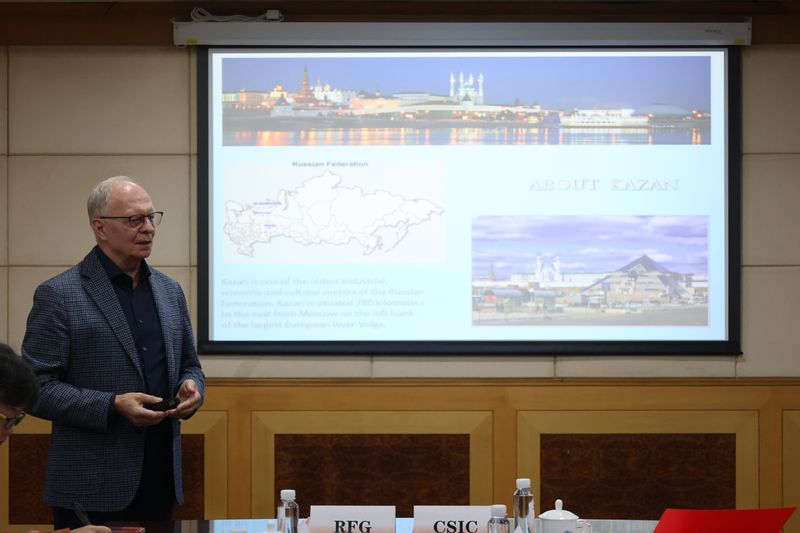
The meeting was chaired by Professor Wen Jianfeng, Secretary-General of the CSIC. Professor Tu Shandong warmly welcomed the Russian delegation, providing a detailed introduction to the history of the consortium and its international conference initiatives, while outlining the future development vision of the consortium. Following that, Professor Valery Shlyannikov and Professor Oleg Plekhov jointly presented an overview of the Russian Group on Fracture, the Russian Federal Research Center, and the Russian Theoretical and Applied Mechanics Committee’s development and research activities.
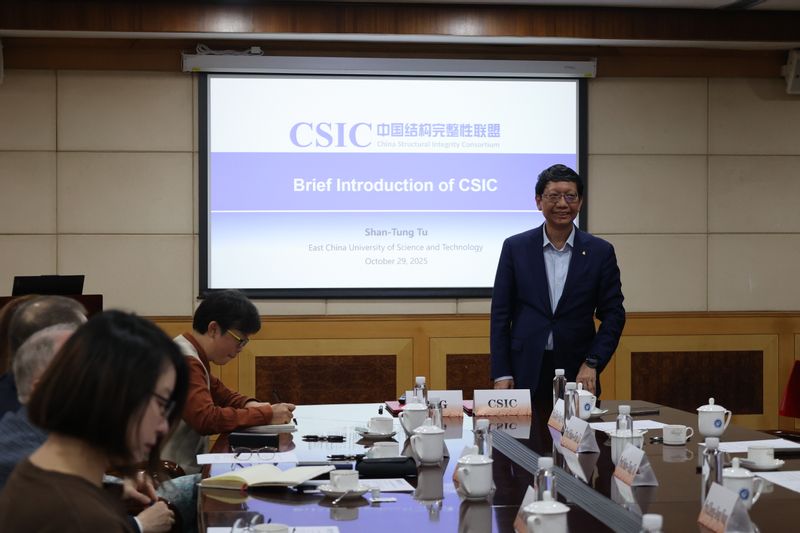
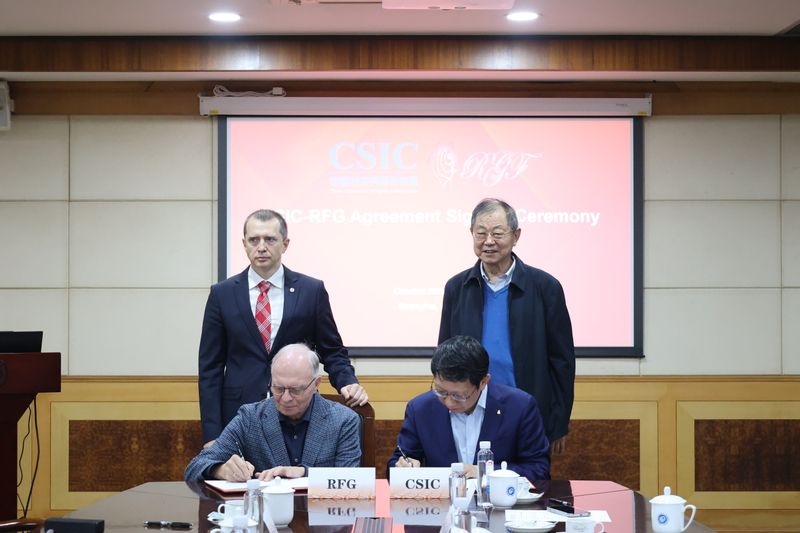
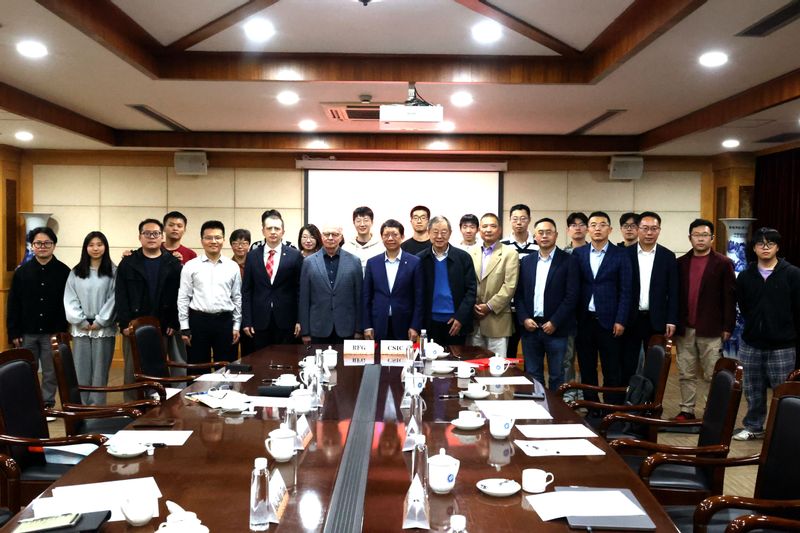
The formal signing ceremony of the technology cooperation agreement between the China Structural Integrity Consortium and the Russian Group on Fracture followed. Representatives from both parties signed the agreement, and all attendees posed for a group photo and exchanged souvenirs.
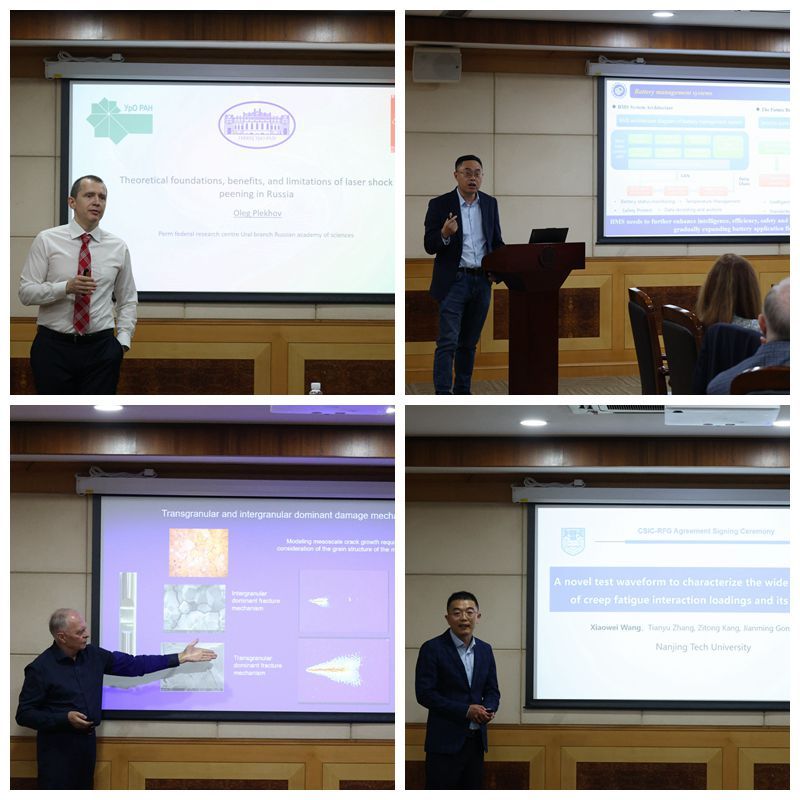
After the signing ceremony, the academic seminar officially began. Professors Oleg Plekhov, Chen Haofeng, Valery Shlyannikov, and Wang Xiaowei each delivered presentations on frontier research topics including *“Theoretical Foundations, Benefits, and Limitations of Laser Shock Peening in Russia”*, *“Pioneering Lithium-Ion Battery Innovation: The Transformative Power of AI”*, *“Simulation Modeling for Structural Integrity Assessment”*, and *“A Novel Test Waveform to Characterize the Wide Range Damage of Creep Fatigue Interaction Loadings and Its Application”*. After each presentation, faculty and students actively asked questions and engaged in in-depth discussions, creating a vibrant atmosphere. At the end of the seminar, Professor Tu Shandong delivered a concluding speech, expressing the hope that the signing of this technology cooperation agreement would serve as an opportunity to promote more cross-border, interdisciplinary academic exchanges and research cooperation. He emphasized the importance of gathering interdisciplinary wisdom to build a complete ecosystem from basic research to engineering applications, ensuring the safety and sustainable development of major human engineering projects.
The China Structural Integrity Consortium is a non-profit, academic social organization dedicated to academic exchanges, scientific research, engineering applications, and knowledge dissemination in the field of structural integrity. It was established in 2012 after extensive discussions and consultations by the Materials Division, Pressure Vessel Division, and Failure Analysis Division of the Chinese Mechanical Engineering Society. By October 2025, the consortium will consist of 17 universities and research institutes. The Russian Group on Fracture is one of the national committees of the European Structural Integrity Society, responsible for organizing and funding seminars and summer schools for young scientists, expanding international scientific cooperation, showcasing the latest research results from European peers, promoting activities related to fracture mechanics and material strength, and supporting journal publications. It was established in 2018 with support from the Presidium of the Russian Theoretical and Applied Mechanics Committee. Currently, the Russian Group on Fracture has 17 member institutions.