On December 5th, the Ministry of Education of China and the French Ministry of Higher Education, Research and Space jointly hosted the Second China-France Education Development Forum at Sichuan University. China's Minister of Education Huai Jinpeng and France's Minister of Higher Education, Research and Space Philippe Baptiste attended the forum and delivered speeches. Shen Haitao, Deputy Secretary of the Party Committee of East China University of Science and Technology (ECUST), represented the university at the forum. Ros-Noëlle Vannier, President of the Federation Gay-Lussac (FGL), ECUST's partner institution, was invited to attend the forum and delivered a speech on Building a Future-Oriented Talent Development System to Promote Sustainable Development.
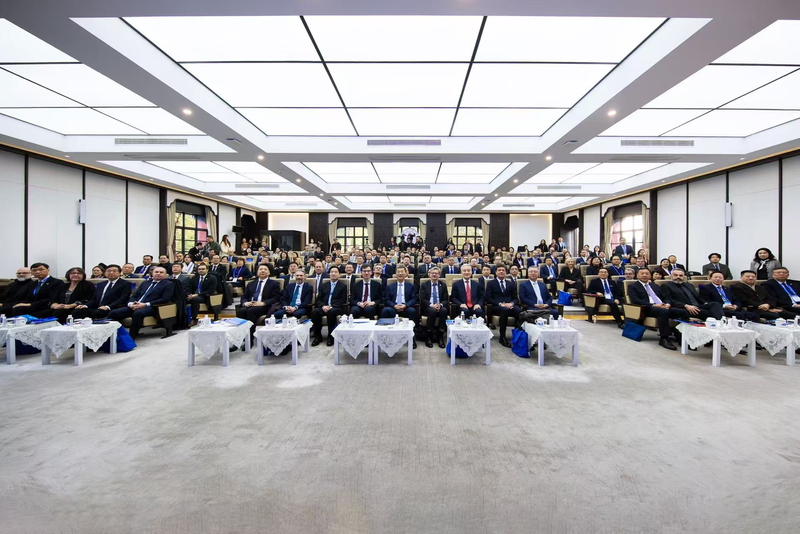
Caption: Group Photo at the 2nd China-France Education Development Forum
Ros-Noëlle Vannier pointed out in her speech that the Federation Gay-Lussac (FGL) and East China University of Science and Technology (ECUST) have established a highly productive cooperation. This partnership is not merely an inter-university handshake, but a deep integration and innovative practice of two distinguished engineering education philosophies. The FGL stands ready to join hands with ECUST to embark on a remarkable chapter of complementing each other's strengths and jointly shaping the future.
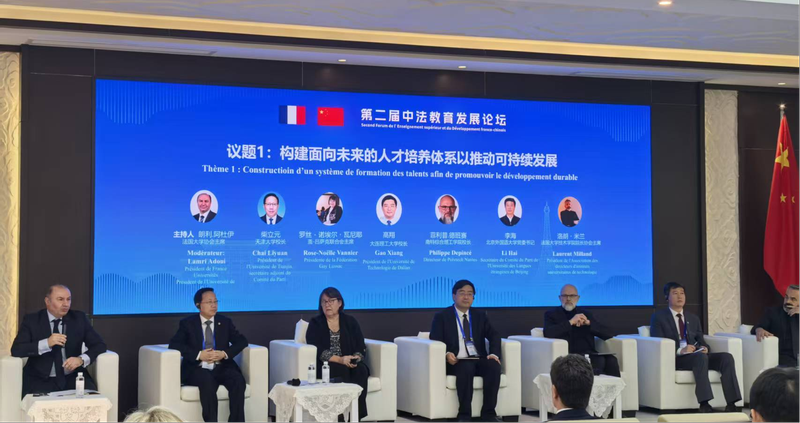
Caption: President of FGL Delivers Speech at Forum
In recent years, the cooperation between East China University of Science and Technology and the Federation Gay-Lussac (FGL) in the field of engineering talent cultivation has been continuously deepening. In November 2025, President Xuan Fuzheng of East China University of Science and Technology visited France and signed a framework cooperation agreement with the FGL. This agreement aims to ensure that China and France jointly build a high-level talent cultivation system characterized by dual degrees, dual cultures, and dual competencies. Through multi-dimensional deep integration, including student and faculty exchanges, joint curriculum development, and teacher interactions, the partnership will continuously e coordinated development in the areas of scientific research innovation and industrial practice. This will not only significantly enhance the internationalization level and teaching quality of engineering education, but will also establish a stable and long-term platform for Sino-French higher education cooperation, which holds profound significance for ing scientific, technological, and cultural exchanges between China and France. Over the past year, a total of 14 French students have come to our university for short-term and long-term study and exchanges. They have completed their study programs at our university through various forms such as course study, internships, and research projects in fields like chemical engineering, biology, business, and Chinese language. The students have generally reported significant gains in professional knowledge, practical skills, and understanding of Chinese culture. In the future, our university will continue to expand international exchange channels, optimize its cultivation system, and provide a high-quality international education experience for more overseas students.
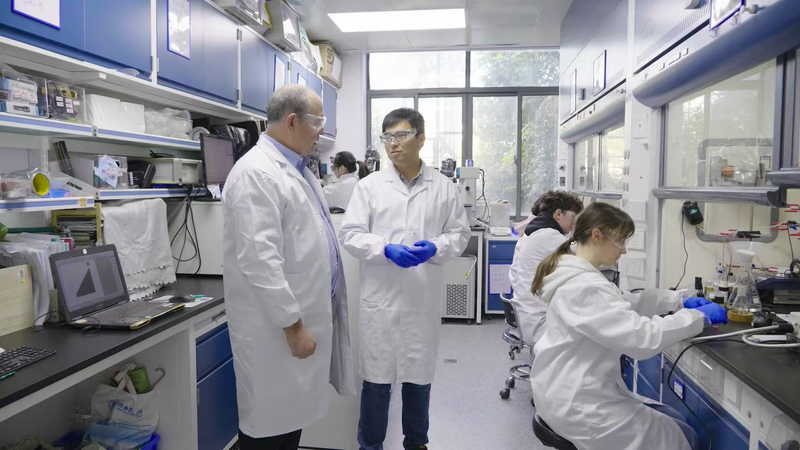
Caption: French Exchange Students at the International School of Excellence Engineers Conduct Research and Studies
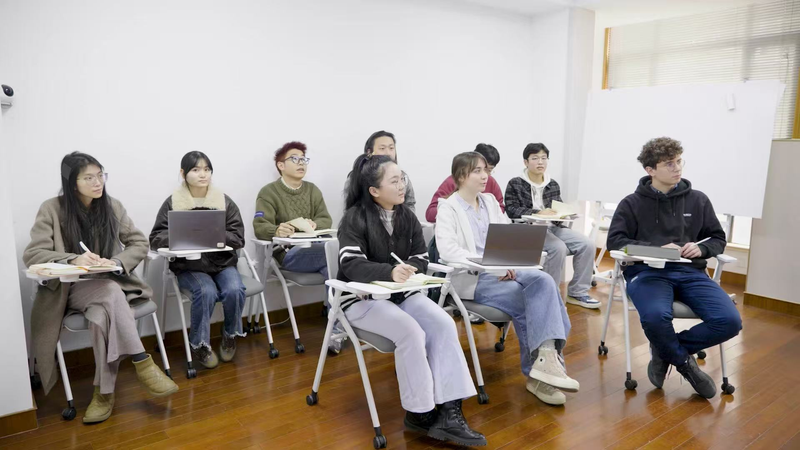
Caption: French Exchange Students Attend Courses
Since its founding in 2019, the International School of Excellence Engineers, jointly run by East China University of Science and Technology (ECUST) and the French Federation of Chemical Engineering Schools (FGL), has established a mature Sino-French integrated education system with remarkable achievements. Integrating French elite engineer education with China’s undergraduate-postgraduate system, the school has created a dual-integrated, multi-pathway training model that allows students to pursue postgraduate studies at ECUST or join joint programs in France. It strictly complies with French CTI certification, introducing over 70 French foundational and engineer competency courses, adding AI+ modules, and adopting small-class project-based teaching to ensure education quality. The school enrolls top students via the national college entrance examination, Shanghai comprehensive evaluation and internal secondary selection, with admission scores meeting or exceeding ECUST’s minimum entry score. It has built an international faculty team including 7 French teachers, with over 20 French teachers teaching in China annually and 30 selected Chinese professional instructors joining the team; regular teaching and research activities are held to advance teaching-research coordination. For industry-university-research collaboration, the school partners with Arkema, Solvay, Michelin and other enterprises to offer courses including Chemical Process Modeling and Numerical Calculation Methods and Process Safety, enhancing students’ practical skills through enterprise-proposed, project-driven learning. In May 2024, it established an Industry-Education Integration Promotion Committee with 12 Fortune Global 500 companies to build joint practice bases, and its achievements have been covered by over 20 mainstream media including People’s Daily and Guangming Daily. Academically, the school has hosted 6 French students and plans to admit over 10 in 2026; culturally, it holds events like the Sino-French Cultural Festival and a 2025 summer school attended by 26 Chinese and French students. In six years of operation, the school has graduated nearly 200 students, sent 75 to France for further study, and its students have won top awards such as the Gold Award in the 2024 China International College Students’ Innovation Competition, setting a benchmark for Sino-French higher education cooperation.
The 2nd China-France Education Development Forum and French President Emmanuel Macron’s visit to China have aroused enthusiastic responses among students of the International School of Excellence Engineers at ECUST. Zhang Jiaxin from Elite Class of Applied Chemistry 251 stated that the education cooperation consensus reached during President Macron’s visit has injected new impetus into China-France exchanges and provided more abundant programs and improved policies for students studying in France. Wu Junyi from Elite Class of Polymer Materials 251 believed that President Macron’s de-ritualized visit reflects cultural empathy between the two countries, and as a student of the Sino-French joint education program, she has personally experienced cultural integration through bilingual teaching and cross-cultural activities. Liu Chang from Environmental Engineering Class 230 mentioned that China-France cooperation plans in aerospace, green economy and other fields are directly linked to common challenges facing humanity, inspiring him to devote himself to engineering innovation and integrate personal growth into national development. Zhou Yucheng from Chemical Engineering Class 230 said that President Macron’s remark that young people are the shapers of the future world has made him deeply aware of his important mission; the fine tradition of China-France education cooperation has been carried forward to this day, and students need to consolidate their professional foundation and improve cross-cultural competence to contribute wisdom to China-France friendship. All students agreed that the outcomes of the forum and the presidential visit will boost the internationalization of engineering education and help them grow into outstanding engineers with a global vision.